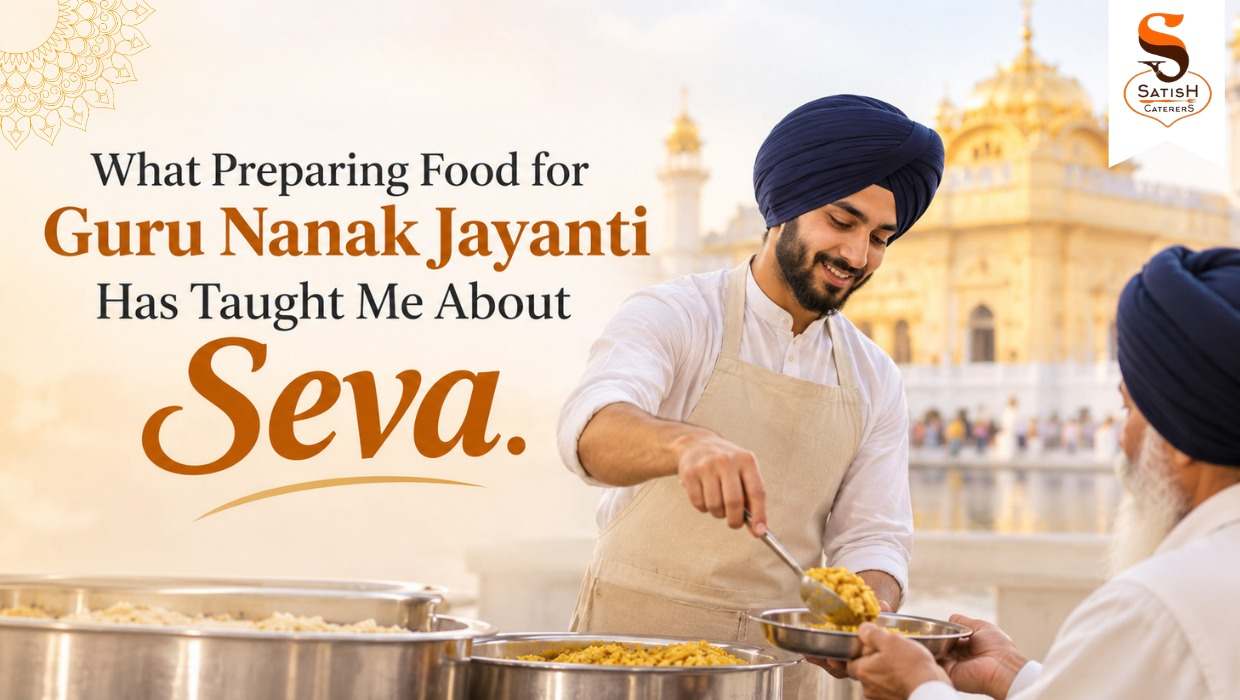
Early mornings during Guru Nanak Jayanti have a rhythm all their own. Long before the city streets wake up, the clatter of ladles against large cooking vessels starts, not out of rush or stress, but with a quiet, shared focus. Over the years of writing about food, hospitality, and community kitchens, nothing has reshaped how I look at cooking quite like watching, and helping, prepare meals for Guru Nanak Jayanti.
In everyday commercial work, food is often measured by presentation, speed, or headcount. Seva strips all of that down to something far simpler and deeper: feeding people with warmth, equality, and care.
1. Ego Doesn’t Survive a Community Kitchen
When you’re chopping vegetables beside twenty other people, nobody cares about titles, job roles, or how fancy your knife skills are. One person peels onions, another stirs a giant vessel of dal, someone stacks steel plates, and another wipes down tables.
That leveling effect is the heart of langar. Everyone sits together and eats the same simple meal, regardless of background or status. Watching that happen up close reminds you that good hospitality isn’t about showing off what you can cook, it’s about making everyone feel equally welcome at the table.
2. Consistency Matters More Than Flashiness
Cooking for a crowd teaches you humility around consistency. If the salt is slightly off in a small pan at home, you adjust it in two minutes. In a large pot meant to feed hundreds or thousands, every measurement, timing check, and ingredient quality counts.
Even in professional catering services Mumbai, the real test isn’t a single elaborate dish; it’s keeping taste, hygiene, and warmth steady from the first serving to the last. That same discipline is visible during Guru Nanak Jayanti preparations, steady hands, patient pacing, and attention to the basics done right.
3. Speed Comes from Rhythm, Not Panic
First-timers often assume large-scale food prep is pure chaos. In reality, the smoothest kitchens move like a calm tide. Dough is kneaded in batches, rotis move steadily from tawa to warmers, and serving lines flow without bottlenecks because everyone knows their small part and trusts the person next to them.
I’ve seen teams with strong operational roots, like Satish Caterers, with their long-standing familiarity with Mumbai gatherings and high-volume event coordination, rely on that exact kind of calm rhythm when managing big crowds. When people aren’t panicking over the clock, the food somehow tastes better too.
4. Presence Is the Real Ingredient
You can follow a recipe to the gram and still miss the mark if your mind is ten miles away. During Guru Nanak Jayanti prep, people show up tired, sleepy, or squeezing hours in between work and family duties, yet once they start rolling dough or serving food, their attention settles into the task.
Seva turns routine tasks into quiet mindfulness. Rolling one more roti isn’t a chore when you picture the person who will eat it ten minutes later.
5. Gratitude Changes How You Taste Food
There’s a big difference between eating in a hurry and receiving a warm plate served with a gentle smile. When you’ve spent hours on your feet helping prepare a meal, you notice the small details, the aroma of roasted cumin, the warmth of fresh kada prasad, the quiet relief on someone’s face after a long day.
It makes you more grateful for every ingredient on your own plate and far more mindful of how food reaches people across a busy city like Mumbai.
Carrying Seva into Everyday Work
You don’t need a festival date on the calendar to practice what Guru Nanak Jayanti teaches about food. Whether it’s cooking a simple meal at home, organizing a community drive, or planning a family celebration with reliable catering support, the mind set stays the same: cook with care, keep ego out of the kitchen, and treat every guest like family.
That’s the real lesson of seva, it doesn’t end when the last plate is washed. It stays with you every time you step near a stove.